 网硕互联帮助中心
51/STM32 全覆盖,适配全电子类专业
本文汇总整理了可直接落地、带实物、可答辩的单片机硬件毕业设计选题。
全部项目基于51 单片机、STM32两大主流硬件平台,涵盖:单机采集、智能控制、环境监测、智能家居、自动化设备、物联网组网等全套方向。
适配电子信息、自动化、物联网、机电一体化、轨道交通、计算机、智能科学等所有理工科专业。
所有选题均为成熟实物方案,可直接用于毕业设计开题、定题、论文撰写、实物制作、答辩展示,适合基础薄弱、没时间自研、想要稳过毕设的同学参考学习。
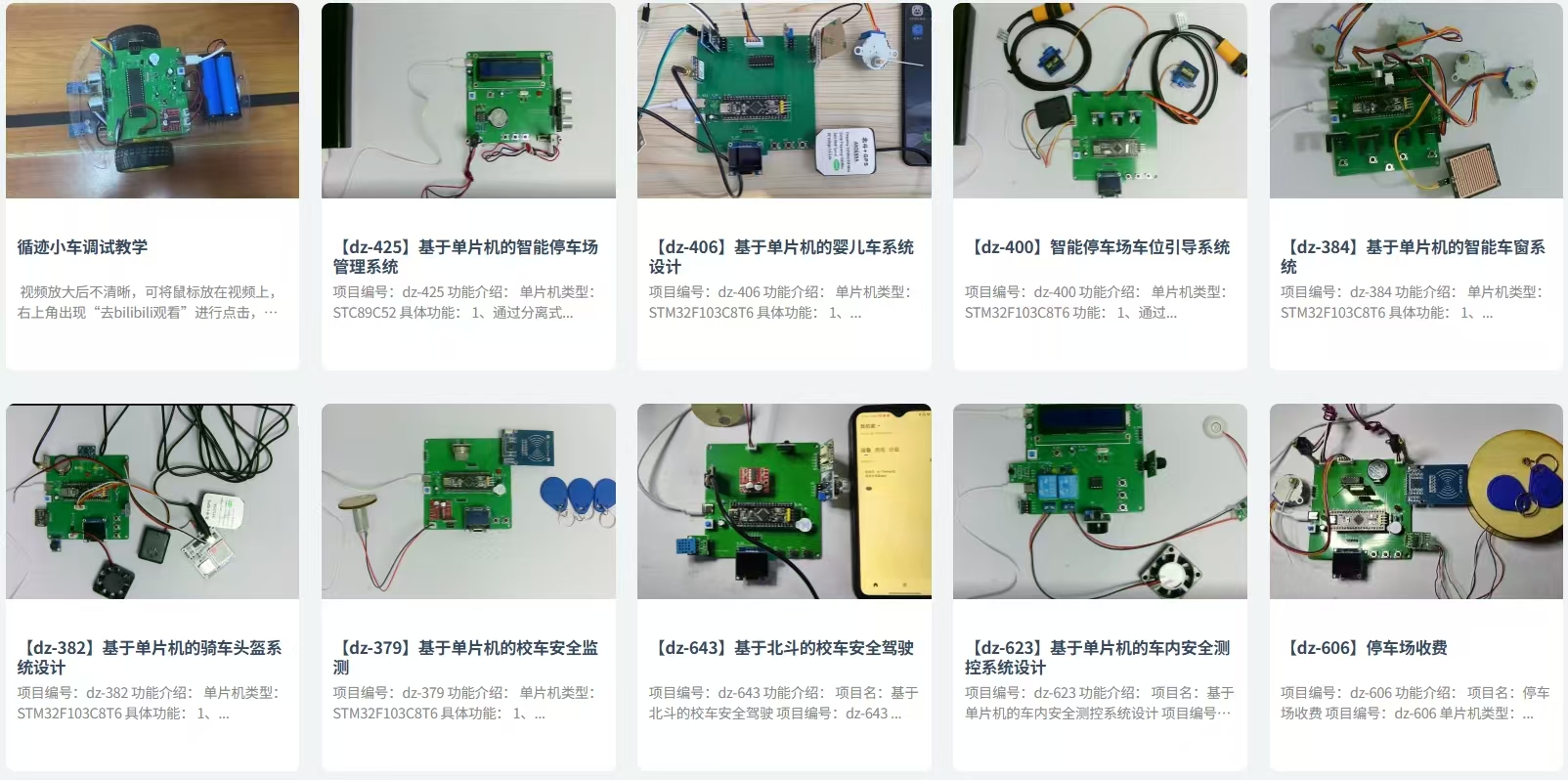
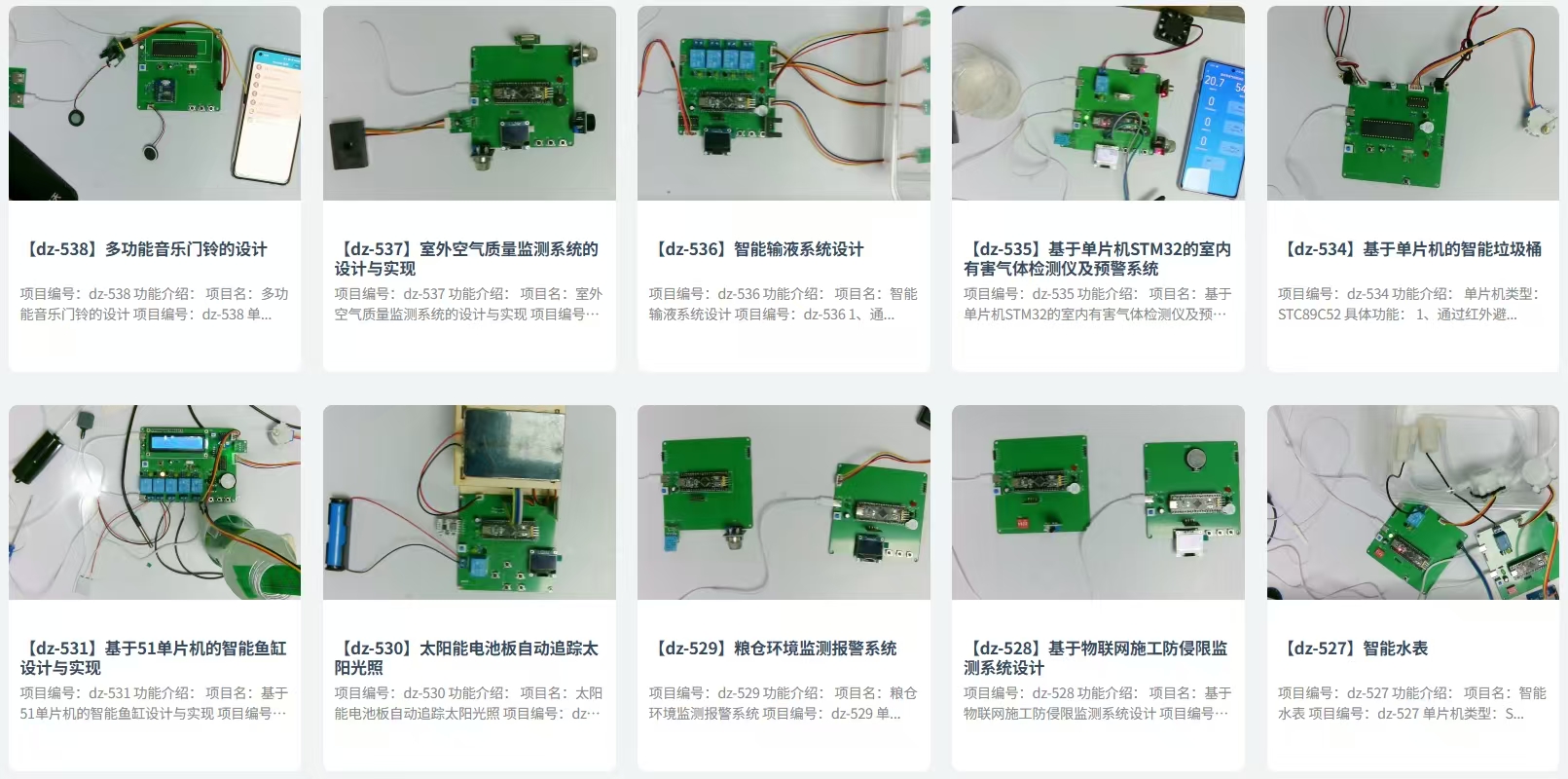
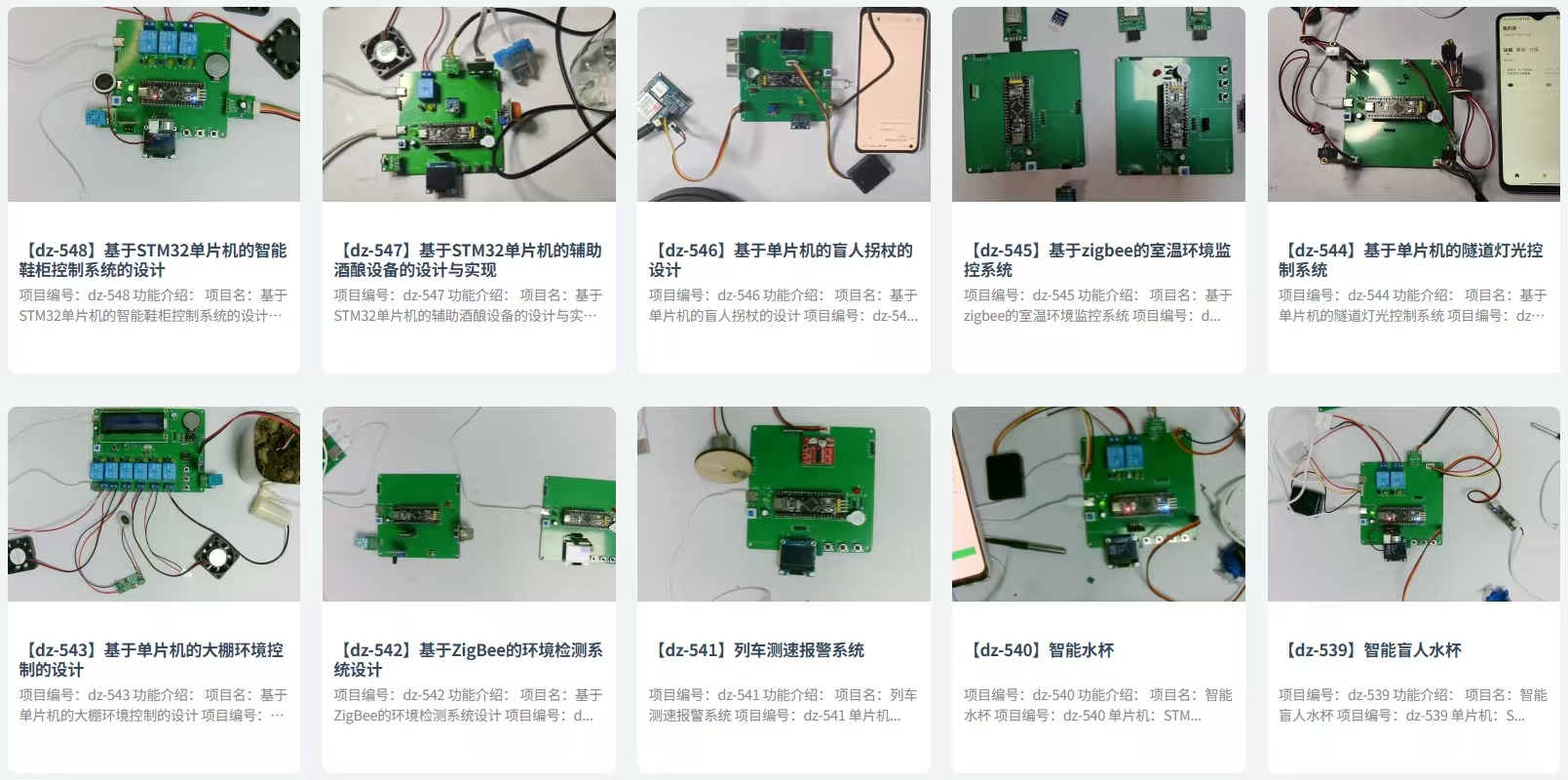
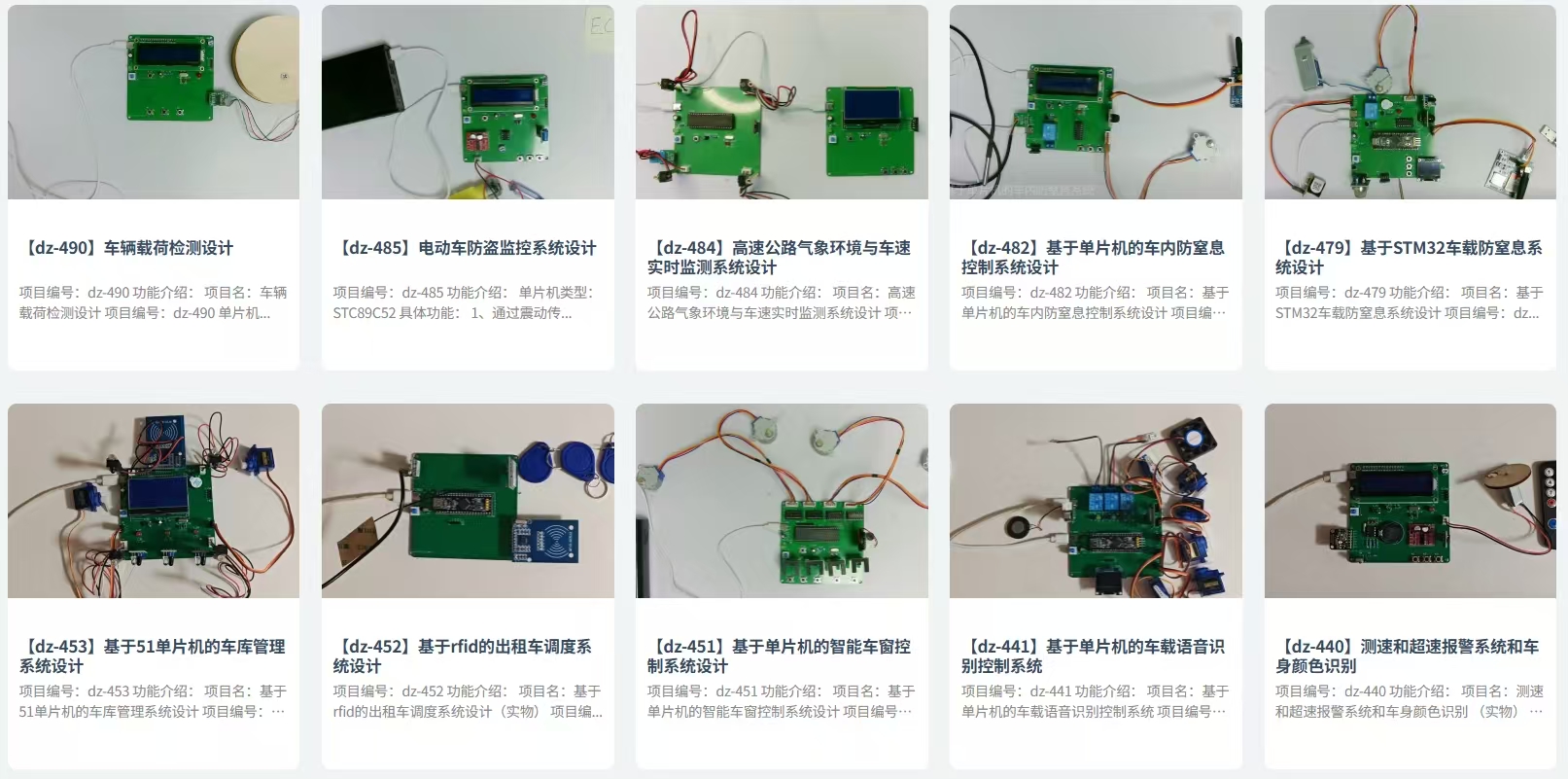
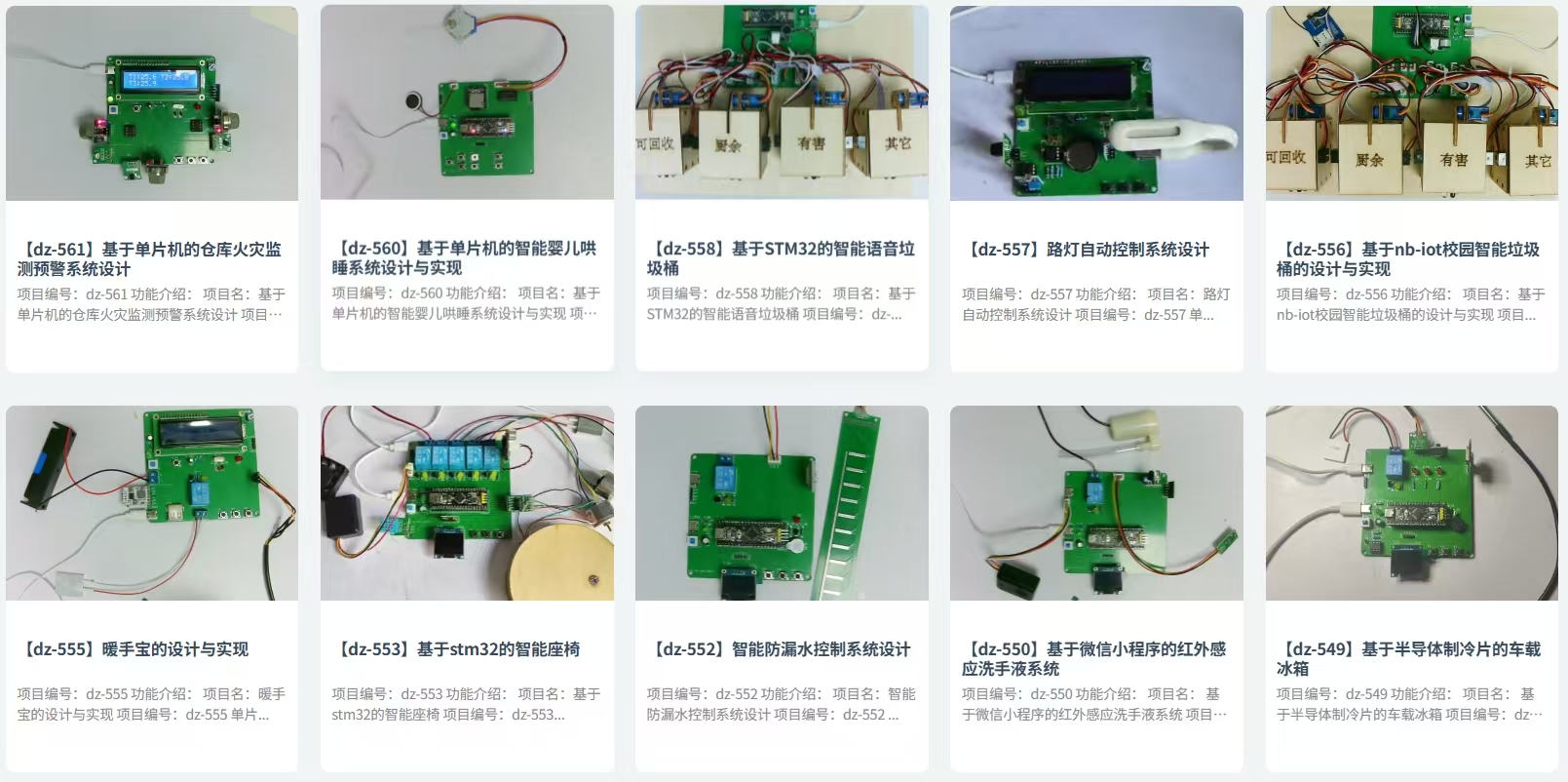
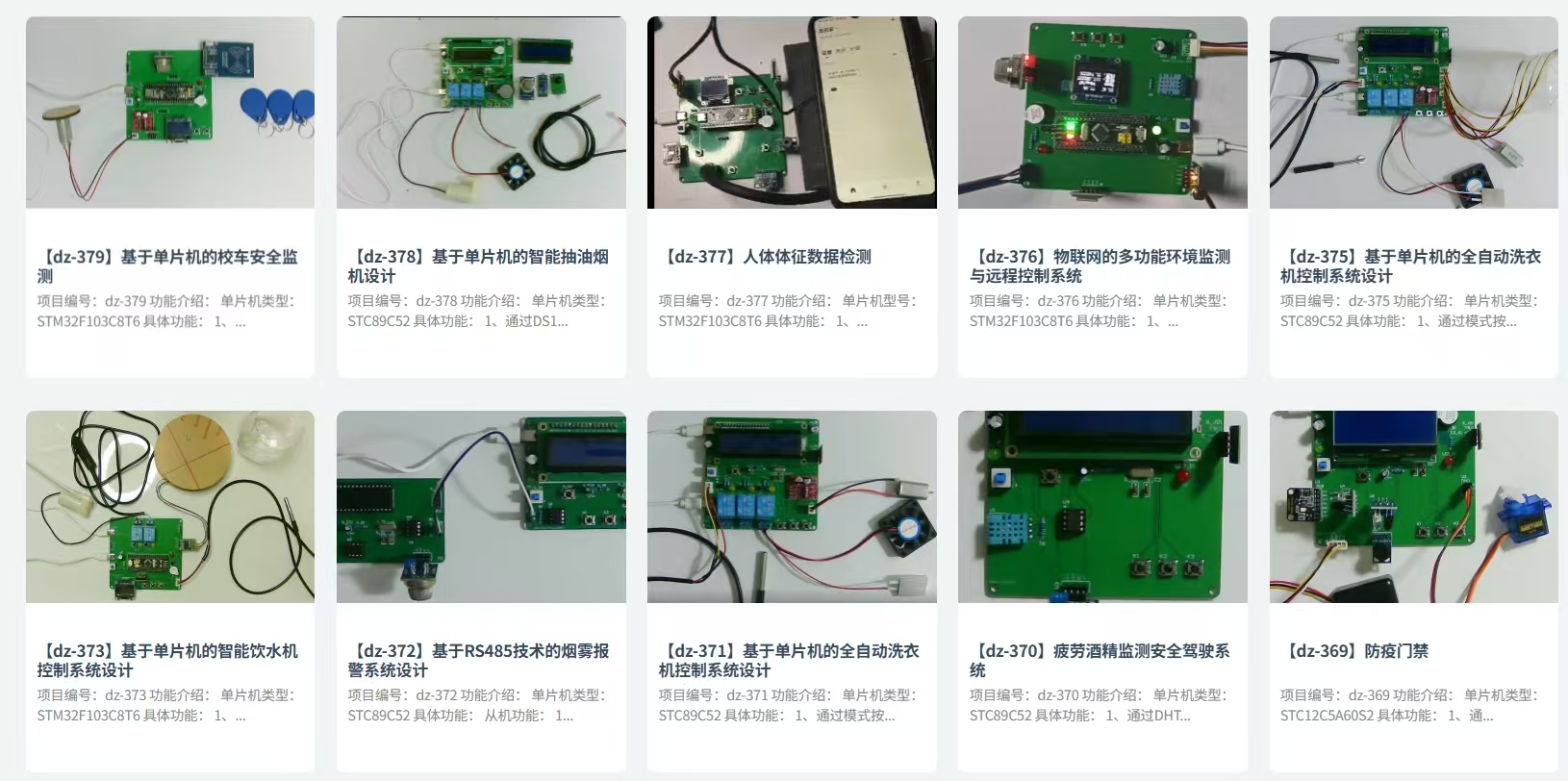
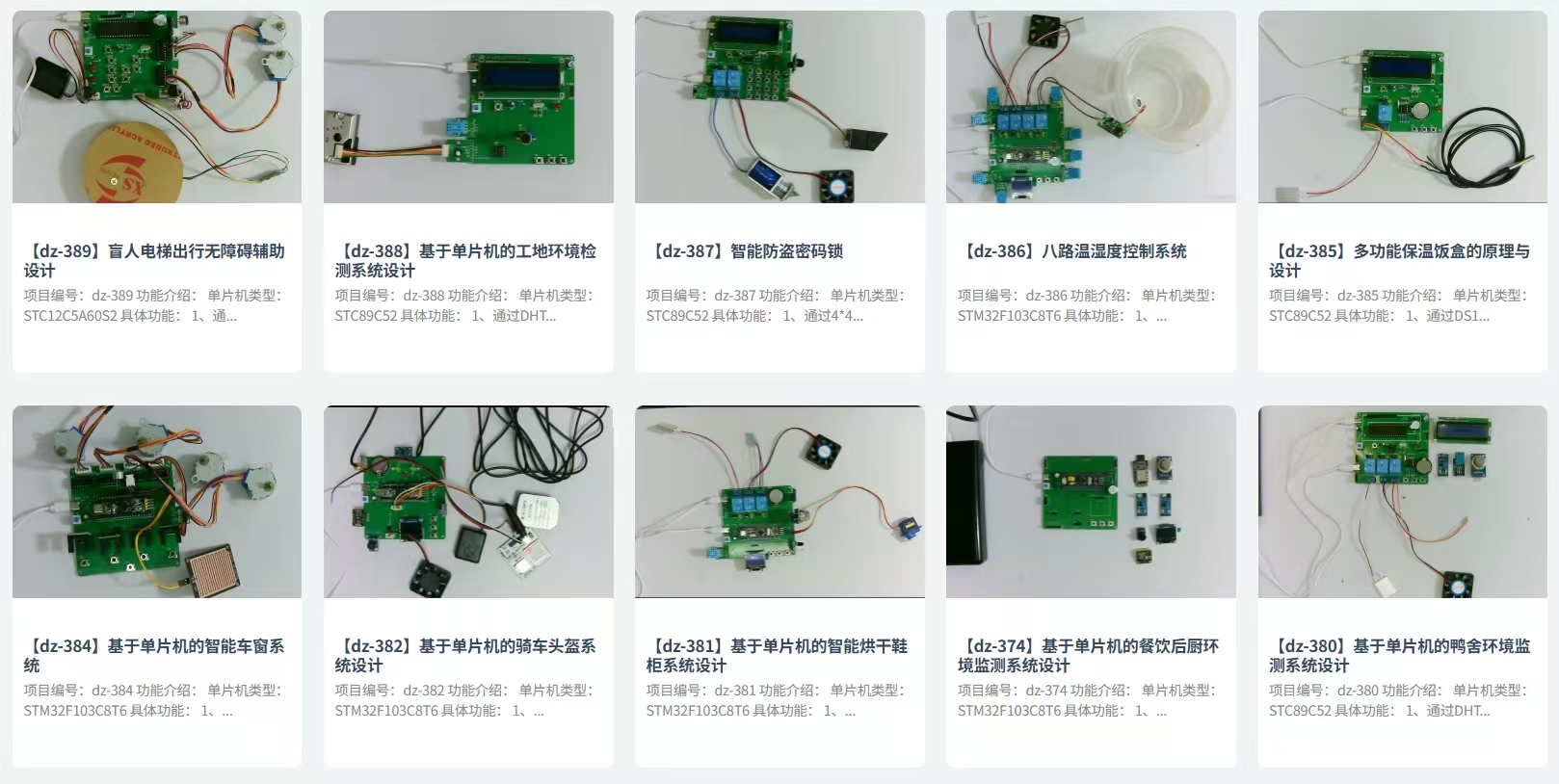
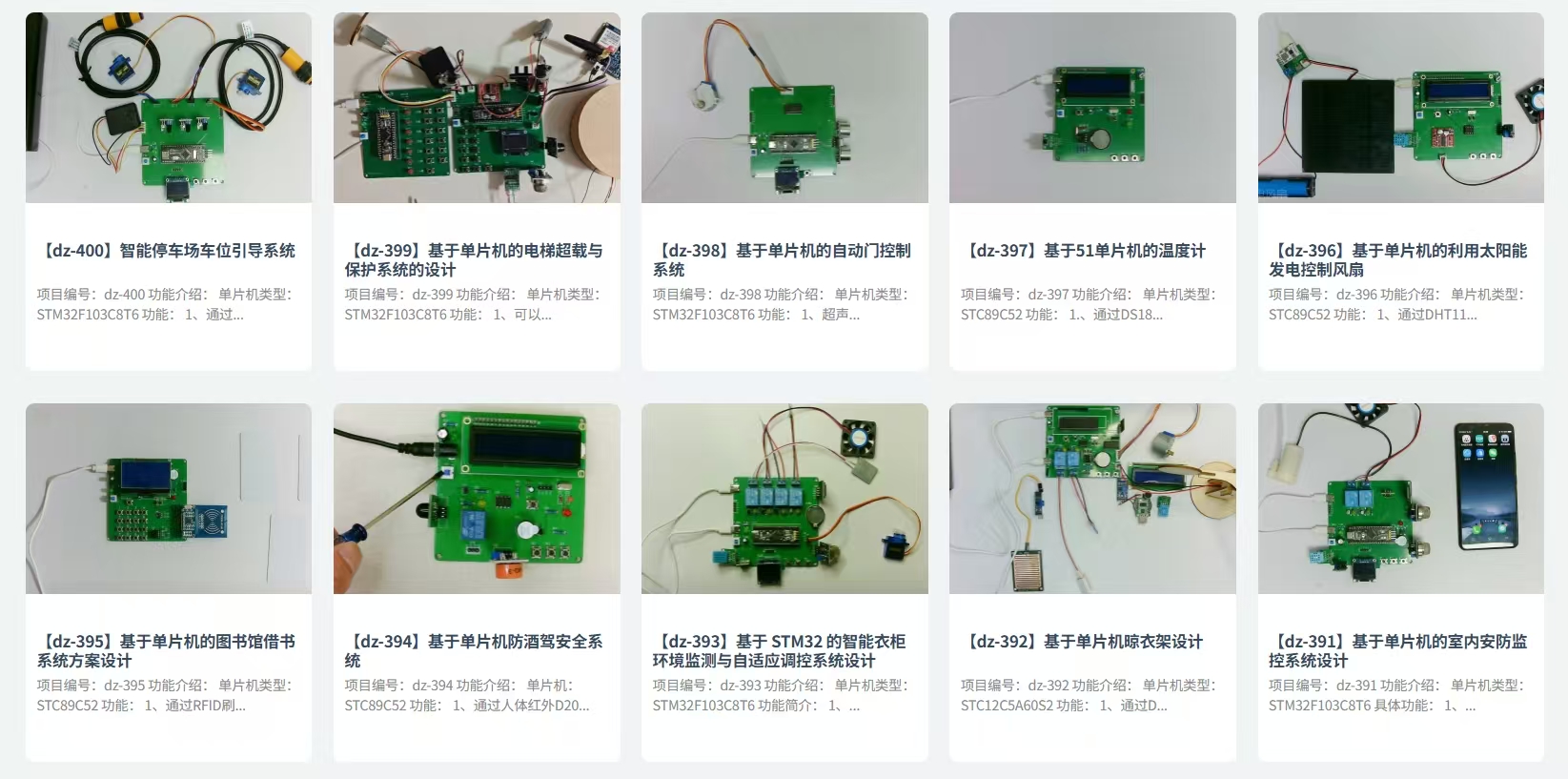
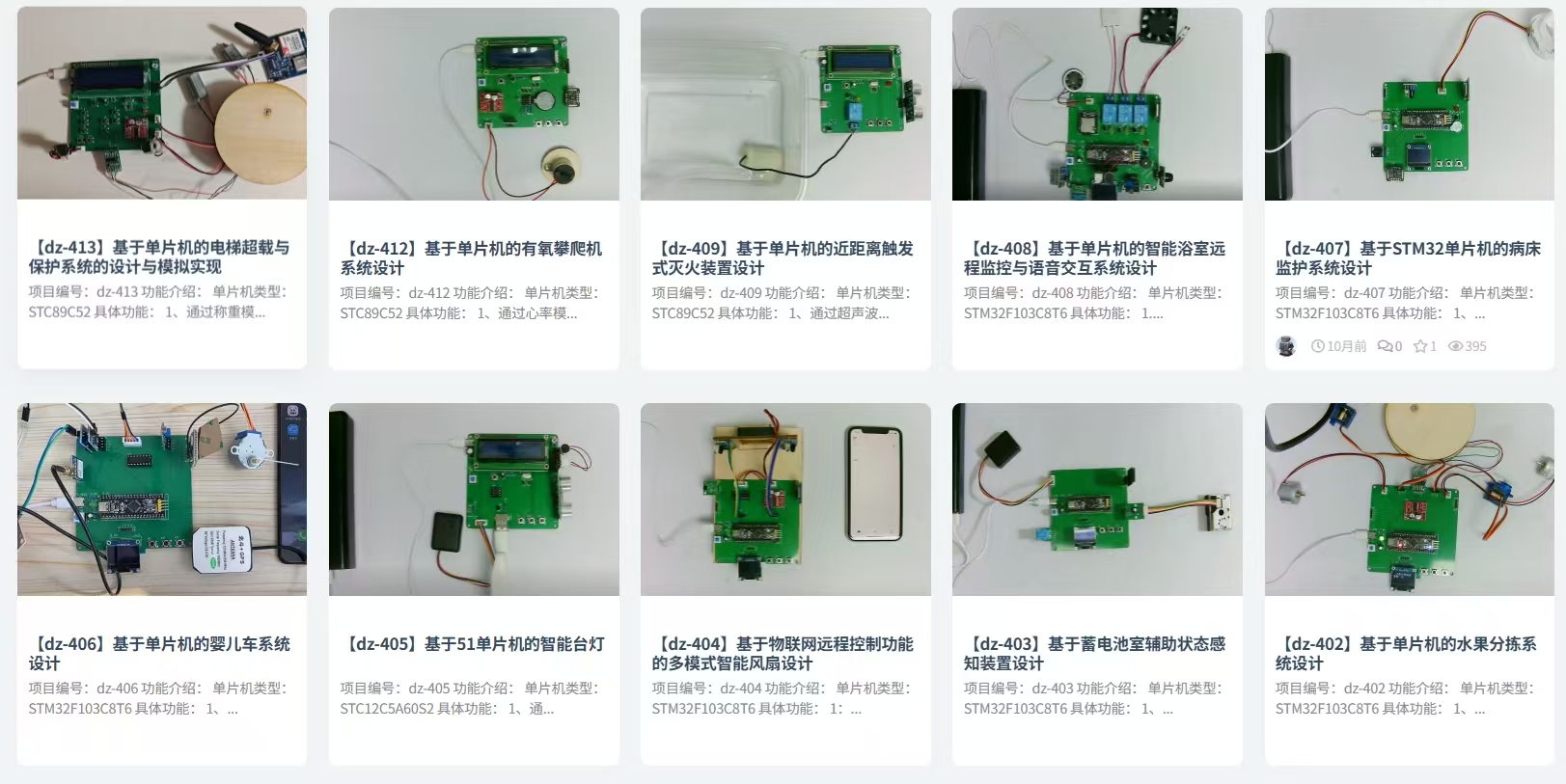
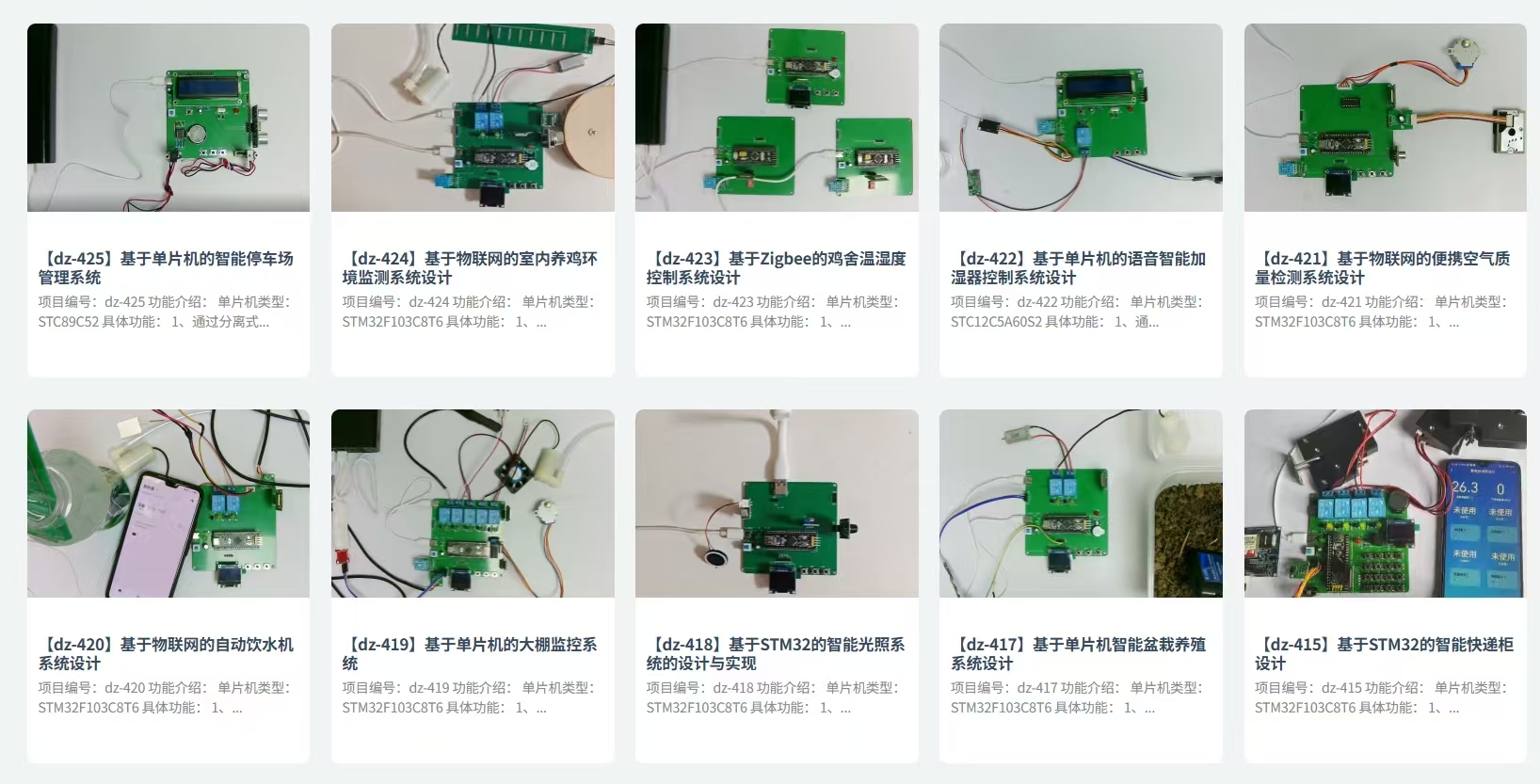
精选可直接选用硬件毕设选题(10 组精选)
毕业设计专业适配详解
对于理工科大学生而言,毕业设计是大学四年学习成果的最终总结,也是学业流程中至关重要、不可跳过的关键环节。尤其是电子信息工程、自动化、物联网工程、机电一体化、智能装备、轨道交通电气、计算机科学与技术等工科专业,毕业设计绝大多数要求以硬件实物 + 程序代码 + 系统设计 + 毕业论文的形式完成,区别于文科纯理论写作,工科毕设更加注重实践性、工程性、落地性与完整性。
很多同学在毕业设计初期都会面临高度统一的困惑:不知道选什么题目、担心选题太简单无法通过答辩、担心选题难度太大做不出来、害怕选题烂大街查重过高、不清楚自己专业到底适配哪一类项目、不会搭建硬件电路、不会写程序、不会整理论框架。
首先,我们区分两大主流硬件毕设平台的适配人群。
51 单片机(STC89C52/STC12) 属于入门级经典单片机,架构简单、资料海量、电路简洁、代码易懂、调试难度极低。非常适合专科、本科基础薄弱、首次接触硬件、时间紧张的同学。51 单片机项目最大的优势是:功能完整、故障率低、容易调试、论文素材丰富、答辩通过率极高,是稳妥保底的最佳选择。适合做灯光控制、报警系统、简单监测、定时控制、电机基础控制类项目。
STM32 单片机 属于中高端嵌入式开发平台,是目前企业开发、高校教学、竞赛科创、毕业设计的主流首选。STM32 资源丰富、外设齐全、拓展性极强,可以搭载传感器组网、OLED 显示、串口通信、蓝牙 WiFi 联网、上位机通信、数据存储、智能算法处理等复杂功能。适合本科理工科、需要拔高绩点、想要项目亮点、想要丰富功能、答辩出彩的同学。
其次,针对不同专业,我详细划分适配的毕业设计方向,方便同学们精准对标自己的专业培养方案,避免选题跑偏导致答辩不通过。
1. 电子信息工程专业 本专业核心培养方向为:信号采集、数据检测、电路设计、嵌入式开发、智能感知。 最适配:各类环境监测、数据采集、传感检测、声光报警、智能控制系统。 不建议:纯软件、纯网页、纯算法类课题,贴合硬件实物更容易高分。
2. 自动化专业 自动化主打自动控制、闭环调节、智能执行、设备联动。 适配:电机控制、自动调光、自动监测、大棚自控、小车自控、超限报警类项目。 专业重点考察:逻辑控制能力、自动调节逻辑、传感器联动机制。
3. 物联网工程专业 物联网核心是 “感知 + 传输 + 云端展示”。 适配:带数据采集、串口上传、无线传输、远程监测的整套系统。 优先选择可联网、可数据可视化、可实时监测的智能硬件项目。
4. 机电一体化、智能装备专业 侧重机械设备控制、执行机构驱动、智能装置自动化。 适配:电机控制、自动启停、感应控制、设备安防监测类课题。
5. 轨道交通、交通电气专业 更适合智能监测、安防预警、环境检测、智能灯光控制、安全报警类项目,贴合行业应用场景,选题新颖、重复率低。
6. 计算机专业(偏硬件方向) 计算机专业学生大多擅长代码,硬件基础薄弱,适合:结构成熟、代码清晰、逻辑简单、功能完善的监测控制系统,软硬结合,答辩优势极大。
为什么优先选择单片机硬件毕设?
第一,通过率最高。 相比于纯软件项目、算法项目、仿真项目,硬件实物项目是工科院校最认可的毕设形式,完全贴合应用型人才培养目标,导师认可度高,答辩老师提问点固定、可控、极易应对。
第二,资料最全、最好写论文。 单片机项目包含:硬件原理、电路分析、器件介绍、程序流程图、代码设计、系统测试、结果分析、总结展望,论文框架天然完整,字数极易达标。
第三,可控性强、不会烂尾。 成熟的成套硬件方案,不存在 BUG 无法解决、功能无法实现、逻辑跑不通的问题,稳定性极强,适合零基础、少时间、跨专业同学。
毕业设计选题避坑指南
本文整理的十套选题,均为近年热度适中、难度适中、创新度适中、适配所有工科专业的优质硬件毕设方案,兼顾稳妥性与创新性,适合所有同学参考学习、开题定题、落地制作。
单片机嵌入式硬件设计,始终是工科毕业设计的主流核心方向,稳定、成熟、易完成、易答辩、易写论文。无论是 51 入门简单项目,还是 STM32 高阶多功能项目,只要贴合本专业培养目标,功能完整、逻辑清晰、实物完整,均可顺利通过毕业设计答辩。
本文持续更新各类单片机、嵌入式、物联网硬件毕设方案,适合所有正在准备开题、定题、做实物、写论文的工科同学参考学习。
Abstract
Single-chip microcontrollers (MCUs) have become the core hardware carrier for the graduation design of engineering majors such as electronic information, automation, Internet of Things, mechatronics and rail transit. MCU-based hardware design projects require students to complete sensor signal acquisition, logic programming, circuit building, system commissioning and result testing. This paper reviews the application status of 51 series and STM32 series microcontrollers in graduation projects, analyzes the classification of common hardware topics, discusses the difficulties and common pitfalls encountered by students in the design process, and explores the matching rules between different engineering majors and embedded hardware projects. The purpose of this review is to provide reference for college students to select appropriate topics, build hardware systems and complete thesis writing, and help students combine the theoretical knowledge learned in university with practical engineering practice.
1. Introduction
Graduation project is a comprehensive practical link of undergraduate engineering education, which is used to assess students’ ability to solve practical engineering problems after four years of professional study. Unlike theoretical papers or simulation projects, hardware graduation projects emphasize physical prototypes, executable codes and measurable system functions. Among all available technical platforms, single-chip microcontrollers occupy a dominant position due to low hardware cost, abundant open-source materials, flexible peripheral expansion and simple debugging process.
The most widely used MCUs for student projects are STC 51 series and STM32 series. The 51 microcontroller is a classic 8-bit core chip with simple architecture and low learning threshold, which is suitable for beginners to complete basic control and data collection tasks. STM32 is a 32-bit ARM-based microcontroller with rich on-chip peripherals, supporting wireless communication, high-speed data acquisition and multi-sensor collaborative work. It can realize more complex system functions and is favored by students who pursue project innovation and excellent defense performance. A large number of engineering students choose these two platforms to complete their graduation work every year. However, many students face common troubles at the topic selection stage, such as high repetition rate of traditional topics, mismatching between project functions and professional training objectives, and overestimating or underestimating the difficulty of hardware development. These problems may lead to delays in prototype production and poor defense results.
2. Classification and Application of Typical MCU Hardware Projects
The existing MCU graduation topics can be divided into several categories according to core functions: environmental data monitoring, intelligent control, safety anti-theft alarm, motor motion control, agricultural intelligent equipment, and Internet-of-Things data transmission.
Environmental monitoring systems use temperature, humidity, air quality and infrared sensors to collect environmental parameters, display real-time data on screen and trigger prompts when values exceed set thresholds. This type of project has stable functions and complete reference materials, so it is the most popular choice for students with weak hardware foundation. Intelligent control projects include automatic light adjustment, window control and timing switch control. These projects focus on closed-loop logic control, which matches the curriculum of automation majors. Safety alarm systems rely on human body induction and infrared sensors to detect abnormal states and output sound and light reminders. Motor control projects use MCUs to drive DC motors or steering gears to realize speed regulation, tracking and obstacle avoidance, which is widely used in intelligent trolley designs.
Some projects can be reconstructed to adapt to professional scenarios. For rail transit majors, ordinary monitoring and control projects can be transformed into applications for freight yards and trackside auxiliary equipment. For example, parking management logic can be modified into stock track occupancy accounting and management system in railway freight yards. The original fire extinguishing trolley project can be redesigned as a track inspection and fire-fighting trolley used in marshalling yards. This reconstruction method effectively reduces topic repetition rate, and the project scenario is highly consistent with the professional background of rail transit.
3. Platform Comparison between 51 MCU and STM32
The 51 series microcontroller is the first choice for low-difficulty graduation projects. Its circuit design is simple, the code structure is easy to understand, and the cost of peripheral components is low. Students can quickly build a functional prototype within a limited time. Its limitation lies in weak computing power and fewer internal resources, so it is only suitable for systems with simple logic and small data volume.
STM32 microcontrollers have obvious advantages in function expansion. It supports Bluetooth, Wi-Fi, serial port communication, data storage and multi-sensor fusion. Students can add data uploading and upper computer visualization functions to enrich project content. The shortcoming of STM32 is the higher learning cost. Students need to master register or HAL library development, and the debugging of hardware faults takes more time. Therefore, STM32 is more suitable for students with solid C language and circuit foundation, or those who want to get high scores in defense.
4. Common Challenges and Pitfalls in Topic Selection and Implementation
Topic selection is the primary and most critical step. Many students blindly select overly innovative topics without checking the availability of hardware materials. Too cutting-edge projects often lack reference documents, and hardware faults are difficult to troubleshoot, which may cause unfinished prototypes before defense. On the contrary, some students choose extremely traditional topics with extremely high repetition rate, and supervisors may require topic revision.
Another common mistake is the mismatch between project content and professional requirements. For rail transit majors, pure household smart home projects may seem disconnected from professional knowledge. Students need to transform the project into railway freight yard or trackside auxiliary application scenarios to reflect professional characteristics. In the hardware production phase, common problems include poor circuit welding, unstable sensor reading, program logic bugs and power supply interference. Most of these faults can be avoided by standardized wiring, component pre-test and modular programming.
In thesis writing, students often only describe hardware connection and code introduction, lacking system testing, data analysis and engineering discussion. A qualified graduation thesis needs to record test data, analyze system errors, discuss the limitations of the prototype and put forward improvement schemes, so as to meet the assessment standards of engineering graduation design.
5. Conclusion
MCU embedded hardware design remains the mainstream direction of engineering graduation projects. 51 and STM32 microcontrollers can meet the development requirements of projects with different difficulty levels. When selecting topics, students should balance the feasibility of physical production, repetition rate and professional matching degree. It is a practical innovation method to transform mature common hardware projects into industry-specific scenarios, especially suitable for rail transit majors.
The graduation project is not only a task to obtain graduation qualification, but also a comprehensive training of circuit design, C programming, system debugging and technical document writing. Through completing an MCU hardware project, students can turn textbook knowledge into practical engineering ability, laying a foundation for future work in embedded, automation and intelligent equipment industries. In the follow-up research, more lightweight and low-cost embedded schemes can be introduced to enrich the optional topics of engineering graduation design.




评论前必须登录!
注册