 网硕互联帮助中心
动词的时态
一般现在时
表示事物的特征。
The sly is blue. 天空是蓝色的
Summer in Changsha is very hot. 长沙的夏天很热,
表示经常性的行为。
常与 always, often, usually, every day等词连用
I often get up early every morning. 我通常每天早晨都早起
He always helps others. 他总是帮助别人
表示客观事实和普遍真理
The sun rises in the east. 太阳从东方升起
The earth goes around the sun. 地球围着太阳转
KnowIedge is power. 知识就是力量
一般现在时态的基本用法是?
一般现在时的形式
|
形式 |
例句 |
|
|
be动词的一般现在时 |
am is are |
I am a student. We are good friends. |
|
实义动词的一般现在时 |
动词原形 动词单三式 |
We play football on Sundays. He likes English very much. |
当第三人称单数主语碰上动词,会发生什么?
动词大变身! 变单三式.
动词单三式怎么变?
|
情况 |
形式 |
例句 |
|
一般情况 |
词尾加s |
get-gets play-plays help-helps look-looks |
|
以-s -x -ch -sh -o结尾的动词 |
词尾加es |
guess-guesses fix-fixes teach-teaches wash-washes |
|
"辅音字母 + y"结尾的动词 |
变y为i, 加es |
fly-flies cry-cries |
注意: 情景动词无人称变化!
写出下列动词的第三人称单数
|
drink drinks |
go goes |
stay stays |
|
make makes |
look looks |
have has |
|
pass passes |
carry carries |
come comes |
|
watch watches |
fly flies |
brush brushes |
单选题
A.look B.looks C.is look
解析:
- beautiful是形容词, 前面要用感官动词
- She是第三人称单数, 动词要使用单三式, 选B
A. take B. takes C.be
解析:
- can情态动词, 跟动词的原型
- take … care of 是固定搭配, 表示"照顾…"
A. go B. gos B. goes
解析:
- always表示经常性动作, 使用一般现在时
- He是第三人称单数, 动词使用单三式
A. help B. helps C. helpes
解析:
- A doctor是第三人称单数
用括号内动词的适当形式填空
- often表示经常性动作, 使用一般现在时, He是第三人称单数, has要使用单三式
- Mike是第三人单数, on Sundays表示每星期(经常性动作), 使用单三式
- 光比声音快, 表达客观真理使用一般现在时, Light是第三人称, 使用单三式
一般过去时
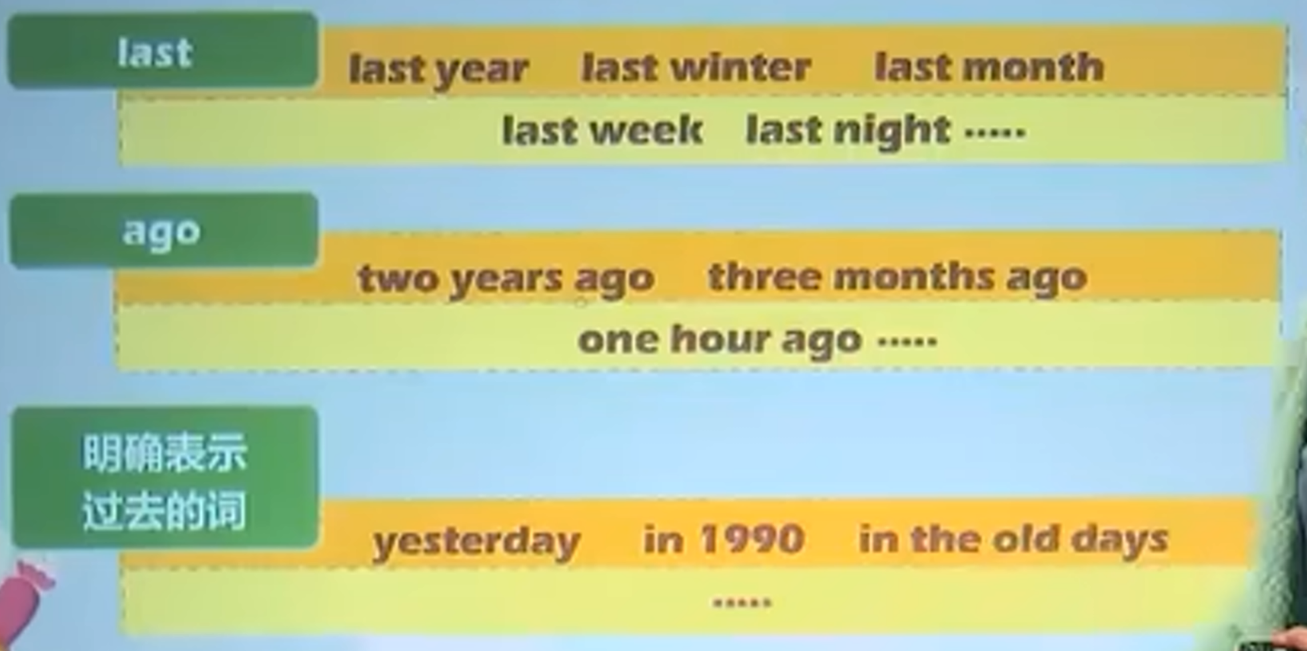
一般过去时的定义,你知道吗?
一动词的一般过去时表示过去某个时间发生的动作或者存在的状态。
I met my classmate last night.
关键就是它,过去时间信号!
动词大变身之"一般过去式”
|
情况 |
变身 |
例句 |
|
一般情况 |
词尾加ed |
look-looked want-wanted |
|
以不发音字母e结尾的词 |
词尾加d |
live-lived like-liked |
|
以辅音字母+y结尾的词 |
变y为i, 加ed |
study-studied fly-flied |
|
末尾只有一个辅音字母的重读闭音节动词 |
双写辅音字母, 加ed |
stop-stopped plan-planned |
元音字母+铺音字母结尾的重读音节!
写出下列动词的过去式
特殊情况,格外注意!
|
意思 |
原型 |
过去式 |
|
是 |
am/is |
was |
|
是 |
are |
were |
|
做 |
do |
did |
|
有 |
have |
had |
|
成为 |
become |
became |
|
来 |
come |
came |
|
去 |
go |
went |
|
开始 |
begin |
began |
|
坐 |
sit |
sat |
|
给 |
give |
gave |
|
得到 |
get |
got |
|
买 |
buy |
bought |
|
教 |
teach |
taught |
|
说 |
say |
said |
|
看见 |
see |
saw |
|
制作 |
make |
made |
|
感觉 |
feel |
felt |
|
睡觉 |
sleep |
slept |
|
保持 |
keep |
kept |
|
花费 |
spend |
spent |
|
跑 |
run |
ran |
|
唱歌 |
sing |
sang |
“原形””过去式“,一样的!
|
意思 |
原型与过去式 |
|
放 |
put |
|
切 |
cut |
|
阅读 |
read |
|
让 |
let |
写出下列动词的过去式
用动词正确形式填空
- yesterday是过去时间信号, 一般过去时
- be有am/is/are, 一般过去时的变形时 was/were
- He(他) 是第三人称, 使用was
- last Sunday (上个星期天)是过去时间信号
- visit (拜访)动词使用动词的一般过去时
- two years ago (两年前) 是时间信号
- live(生活), 使用动词的一般过去时
- last Halloween上一个万圣节, 是过去时间信号
- have (拥有) 使用一般过去时
- in 1990 在1990年, 是过去时间信号
- I是第一人称, 使用am, 过去式是was
小结
一般将来时
一般将来时的定义 ?
一般将来时表示将来某一时刻的动作或者状态!
I will visit my grandmother tomorrow.
关键就是它,将来时间信号!
将来时间信号,你知道多少?
next + 时间: “下一个”
next year, next month, next week, next hour.
tomorrow:“明天”
tomorrow morning/afternoon/evening
in + 时间: "…时间后"
in three days "三天后" in one week "一个星期后"
明确表未来时间
in 2025, after school…
一般将来时态的构成
shall/will + 动词原形 (shall 多用于第一人称I/we)
I/We shall meet him at six o'clock tomorrow.
It will rain tomorrow.
Will you please sign your name here? 你能在这里签名吗 ?
be going to + 动词原形, 表示将来打算计划决定要做某事
今晚,我打算去看部电影。
下课后,我们打算去打篮球。
用动词正确形式填空
- 时间信号: 下一周, 动词使用将来时态
- He他 第三人称, 使用well+动词原型
- 时间信号: 下周日, 动词使用将来时态
- They他们 第三人称, 使用well+动词原型
- 时间信号: 两年后, 动词使用将来时态
- She她 是第三人称, 使用will + 动词原型
- 时间信号: 明年夏天, 动词使用将来时态
- We我们 是第一人称, 使用will或will + 动词原型
选择题。
A. isn't working
B. doesn't working
C. isn't going to workimg
D. won't work
解析: next month下一个月, CD都是一般将来时态, C语法有误, going to + 动词原型
A. is , will be
B. is, is
C. will be, will be
解析: this week本周, 要使用一般现在时, He他是第三人称, 使用is.
next week下周要使用一般将来时, 使用will be
A. coming back
B. comes back
C. will come back
D. is going to coming back
解析: in three days三天后, 使用一般将来时构成
CD都可以, 但是D语法错误, going to + 动词原型
A. have
B. will having
C. are going to have
解析: this afternoon今天下午, 使用一般将来时构成
BC都对, 但是B语法错误, will+动词原型
现在进行时
现在进行时的构成,你发现了吗 ?
be+ v-ing (动词分词)
be动词随主语变化而变化!
我正在做作业。
正在下雨。
他现在正在一家公司上班。
现在进行时: be + v-ing
|
主语 |
be |
v-ing |
|
第一人称单数 I |
am |
speaking |
|
第三人称单数 He/She/It |
is |
running |
|
第二人称单数 you/各人称复数 |
are |
listening to the class |
动词大变身之“现在分词!
|
情况 |
变身 |
例句 |
|
一般情况 |
词尾+ing |
go-going play-playing |
|
以不发音字母e结尾的词 |
去e, 词尾+ing |
live-living come-coming |
|
以ie结尾的词 |
变ie为y 再加ing |
die-dying lie-lying |
|
末尾只有一个辅音字母的重读闭音节动词 |
双写辅音字母, 再加ing |
get-getting run-running |
重度闭音节: 元音字母+辅音字母结果的重读音节.
写出下列动词的现在分词形式
ask asking
study studying
dance dancing
write writing
sit sitting
tie tying
shop shopping
make making
read reading
buy buying
现在进行时的定义
表示此时此刻正在进行或发生的动作, 常与now, right now, at the moment, at present 等时间词连用
I am watching a movie now.
He is having a dinner with his friends at the moment.
Look ! Listen ! 后面的句子多用现在进行时态!
表示一段时间或现阶段进行或发生的动作,常与these days, this week/month等时间词连用
We are working on a farm these days.
He is staying at home this week.
进行时表将来, 表示“计划,安排好", 即将要发生的事情。
The spring is coming.
My uncle is leaving for Beijing next week.
用动词的适当形式填空,
1. Look! Some boys are playing (play) basketball.
解析: Look时间信号, 使用现在进行时态
2. lt is raining (rain) now.
解析: now时间信号, 使用现在进行时态
3. He is coming (come). He is on his way now.
解析: now时间信号, 使用现在进行时态
4.Listen! Tom is singing ( sing) an English song.
解析: Listen时间信号, 使用现在进行时态
5. Where is Lily? She is having (have) a dinner with her friends.
解析: 根据题意, 使用现在进行时态
时态总结
每个时态的意义?
一般现在时
表示经常习惯性动作,事物的特征,客观事实和真理
一般过去时
表示发生在过去的动作或状态
一般将来时
表将来某个时间要发生的动作,或着表示邀请或询问 ( Will you …)
现在进行时
此时此刻或某一时段正在发生的动作,有时表计划将要发生的事情
不同时态,动词大变身 ?
|
时态 |
动词变身 |
例句 |
|
一般现在时 |
动词原型or动词单三式 |
It is a sunny day. He studies English haed. |
|
一般过去时 |
动词过去式 |
I was asleep last night. |
|
一般将来时 |
will+动词原型 be going to + 动词原型 |
She will go back home tomorrow. They are going to have a party next weekends. |
|
现在进行时 |
be + 动词现在分词 |
I am cleaning my room now. |
怎么分辨不同时态的用法?
一般现在时:
always/often/usually…
一般过去时:
yesterday/yesterday afternoon…
last year/week/month…
one hour ago..
In 1945
一般将来时:
tomorrow/tomorrow afternoon….
next year/weeky/month…
In 2045
现在进行时:
now/just now
at present/at the moment…
Look!
Listen!
实战演练。
解析: Listen使用现在进行时态, be动词 + 动词的现在分词形式
解析: last week使用一般过去时态, be动词的一般过去式式was
解析: Look使用现在进行时态, be动词+动词的现在分词形式,
The woman主语是第三人称, be动词使用is
解析: next Monday使用一般将来时, 使用will+动词原型
解析: every Tuesday使用一般现在时, Miss Li是第三人称, 使用动词的单三式
解析: last night.使用一般过去式, leave动词的一般过去式是不规则变化, left
解析: often使用一般现在时, Joan是第三人称, catch动词进行单三式变化
实战演练。
A. like
B. likes
C. liking
解析: 表述客观事实, 使用一般现在时, They是第三人称复数形式, 排除B
A. ask
B. asks
C. asking
解析: very often使用一般现在时, Tom's English teacher是第三人称单数, 动词使用单三式
A. moves
B. moving
C. move
解析: 1 year later一般将来时, am going to + 动词原型
A. takes
B. is talking
c. is going to take
解析: often使用一般现在时, Mike第三人称单数, 动词使用单三式
A. leaves
B. leaving
C. left
解析: 10:00 last night使用一般过去时, 动词使用过去式, leave是不规则变化
词汇小结
各类词汇的定义你知道了吗
名词
表示人、事、物、地点以及抽象概念的词
冠词
一名词的“帽子”。定冠词&不定冠词
代词
一名词的“替代品”,人称/物主/反身/不定代词
形容词
名词或代词的“修饰词". 表示"…的"
副词
动词,形容词,其他副词的“修饰词”, 表示" …地
介词
表示名词或代词与其他成分之间的关系
动词
表示动作或者状态的词
你能分辨出句子中词汇成员吗?
I have some beautiful pictures.
我有一些漂亮的照片。
Mr. Li has a daughter. Her name is Li Hua. She studies very hard.
李先生有一个女儿。她的名字叫李华。她学习很刻苦。
常考点1: 名词单数or复数 ?
Mr. Wang has two children(child). Both of them are studying abroad.
解析: child是可数名词, two表示复数, child的复数形式是不规则变化
常考点2: 名词所有格,独自拥有or 共同拥有?
- A'S and B'S 表示独自拥有
- A and B'S 表示共同拥有
This is __ mother. Her name is Mary.
A. Lily's and Lucy's B. Lily and Lucy's
解析: mother是单数, 选择共同拥有 B
常考点3: 不定冠词or定冠词or“0”冠词?
规则要牢记
不定冠词 a/an
- 元音音素开头选an
- 辅音音素开头选a
- 提示: 音素是音标相关的知识, 不要和元音字母弄混了
规则要牢记
定冠词 the
规则要牢记
“0”冠词就是不用冠词的情况
常考点4: 人称代词主格or宾格
一般来说,动词前填主格,动词后填宾格
单选题:
___ are twin sisters. l love __ very much. (A)
A. They. them
B. They, they
C. Them, them
D. Them, they
解析:
空格在be动词are的前面, 动词前面用主格
空格在动词love的后面, 动词后面用宾格
常考点5: 名词性物主代词or形容词性物主代词?
有无名词或代词跟随,有就形容词性物主代词,无就名词性物主代词。
单选题
This is not __ book. lt is __. A
A., your, mine
B. yours, my
C. your, my
D. yours, mine
解析:
book是名词, 空格使用形容词性物主代词
没有名词, 空格使用名词性物主代词
常考点6 :形容词or副词 ?
看被修饰词的词性。形容词修饰名词/代词, 副词修饰动词/形容词/副词。
单选题
They are listening to the teacher __. (B)
A. careful
B. carefully
解析: listening是动词, 使用副词修饰动词,
常考点7: 形容词&副词原级-比较级-最高级用法
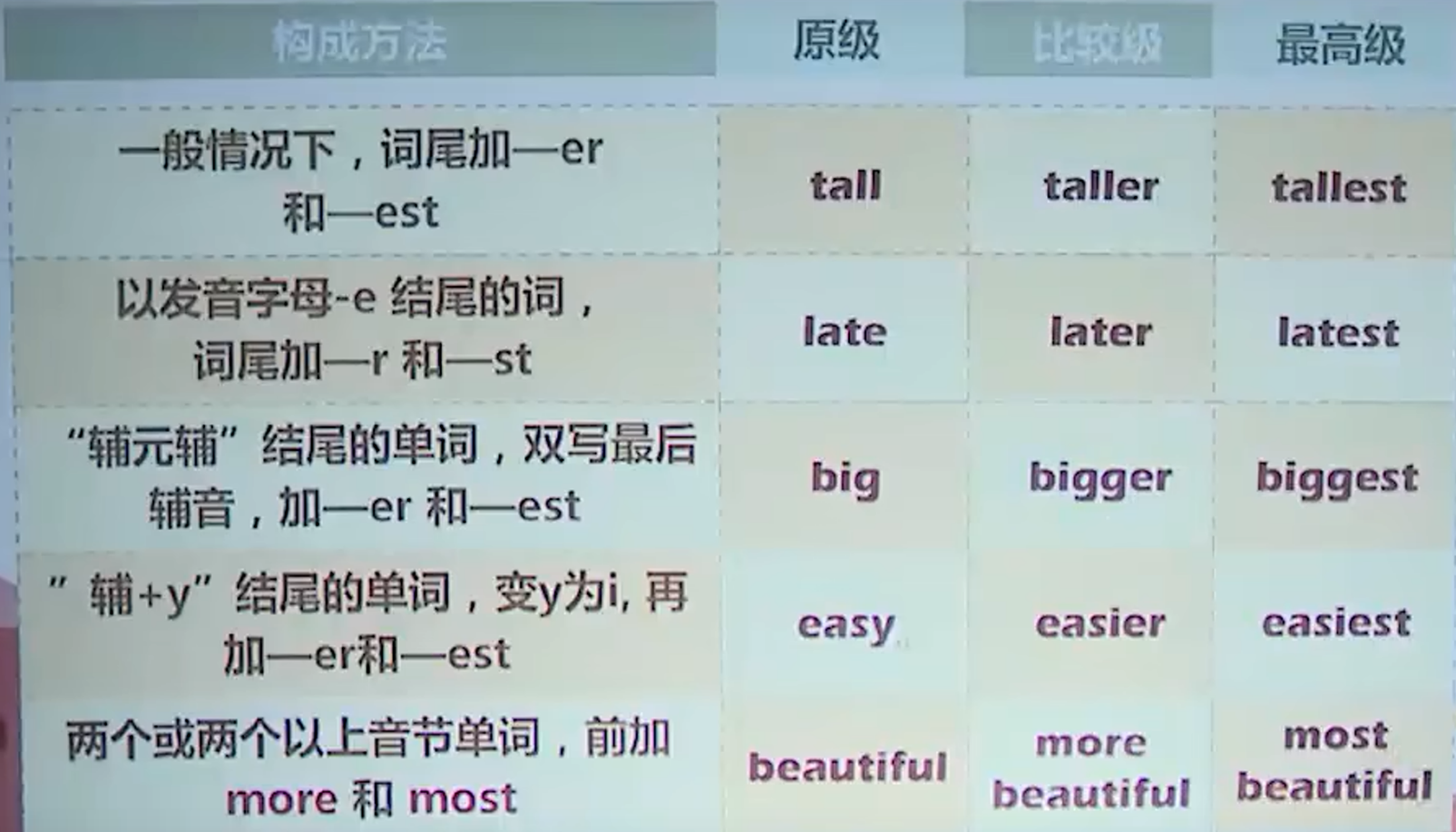
注意: 最高级一定跟 the 搭配使用
常考点8: 介词区别用法
介词本身的意义。
同类介词的区别用法。
单选题
He is __ America. So he can't speak __ Chinese. (C)
A. to, in
B. at, from
C. from, in
D. on, at
解析: 他来自美国, 使用from, 不能说中文, 语言前面使用in方式介词连接
常考点9:动词各大时态
不同时态表达的意思(时间信号词很关键)!
动词变身相关规则。
按要求写单词:
bus(复数) __ buses
he(宾格) __ him
my(名词性物主代词) __ mine
bad(比较级) __ worse
write(现在分词) __ writing
选词填空
解析: like动词后面的代词使用宾格,
解析: 后面没有名词或形容词, 使用名词性物主代词
解析: by后面接反身代词,
解析: foot使用 on 作为介词
解析: people是可数名词, 使用many修饰
解析: as … as 之间使用形容词的原级, 使用tall
解析: 根据句意使用最高级, the tallest
单选题
A. comes
B. is coming
C. will come
解析: Look使用现在进行时, 选B
A. do, playing
B. did, playing
C. did, play
解析: yesterday使用一般过去时, can情态动词后接动词原型, 选C
A. was
B. am
C. is
解析: Two years ago 使用一般过去时, be动词的过去式, 选A
A. Are
B. Would
C. Will
解析: 温婉的询问使用Would, 选B


评论前必须登录!
注册